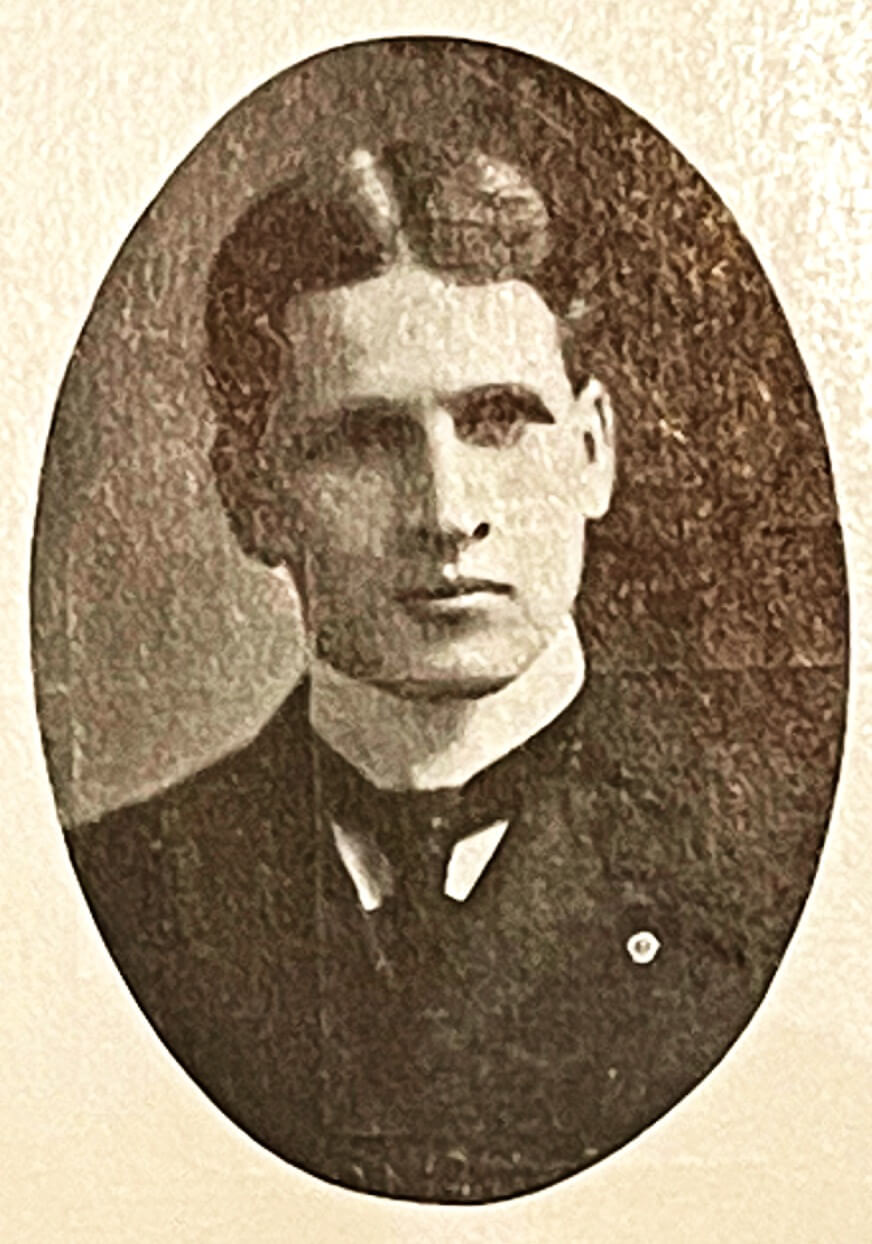
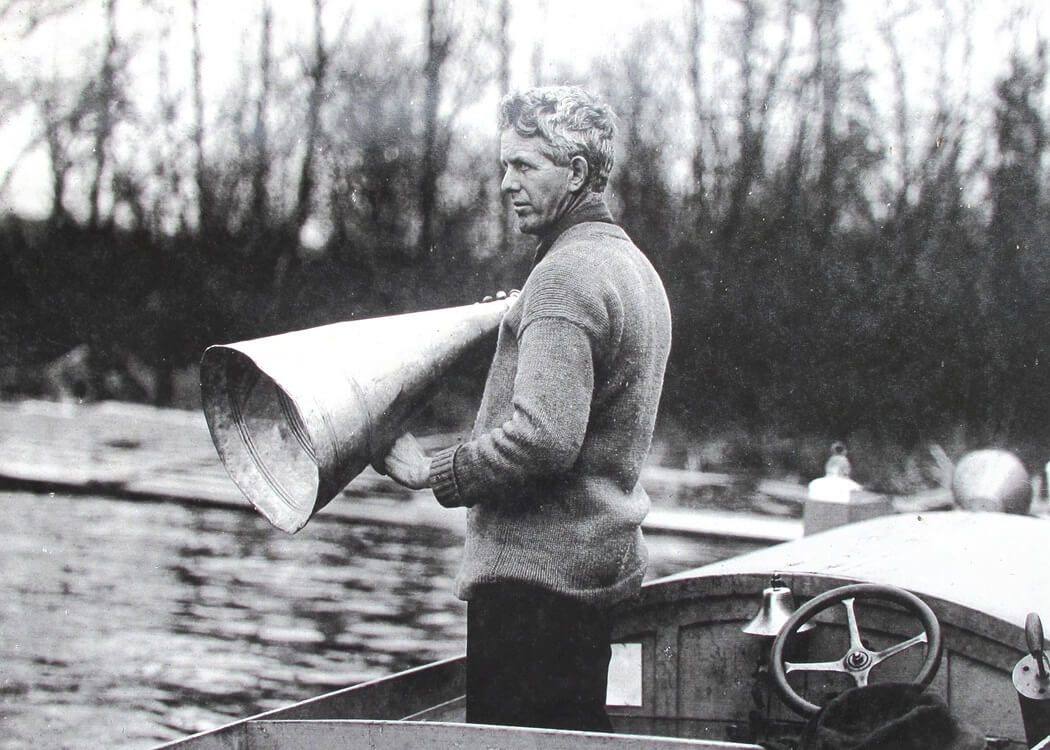
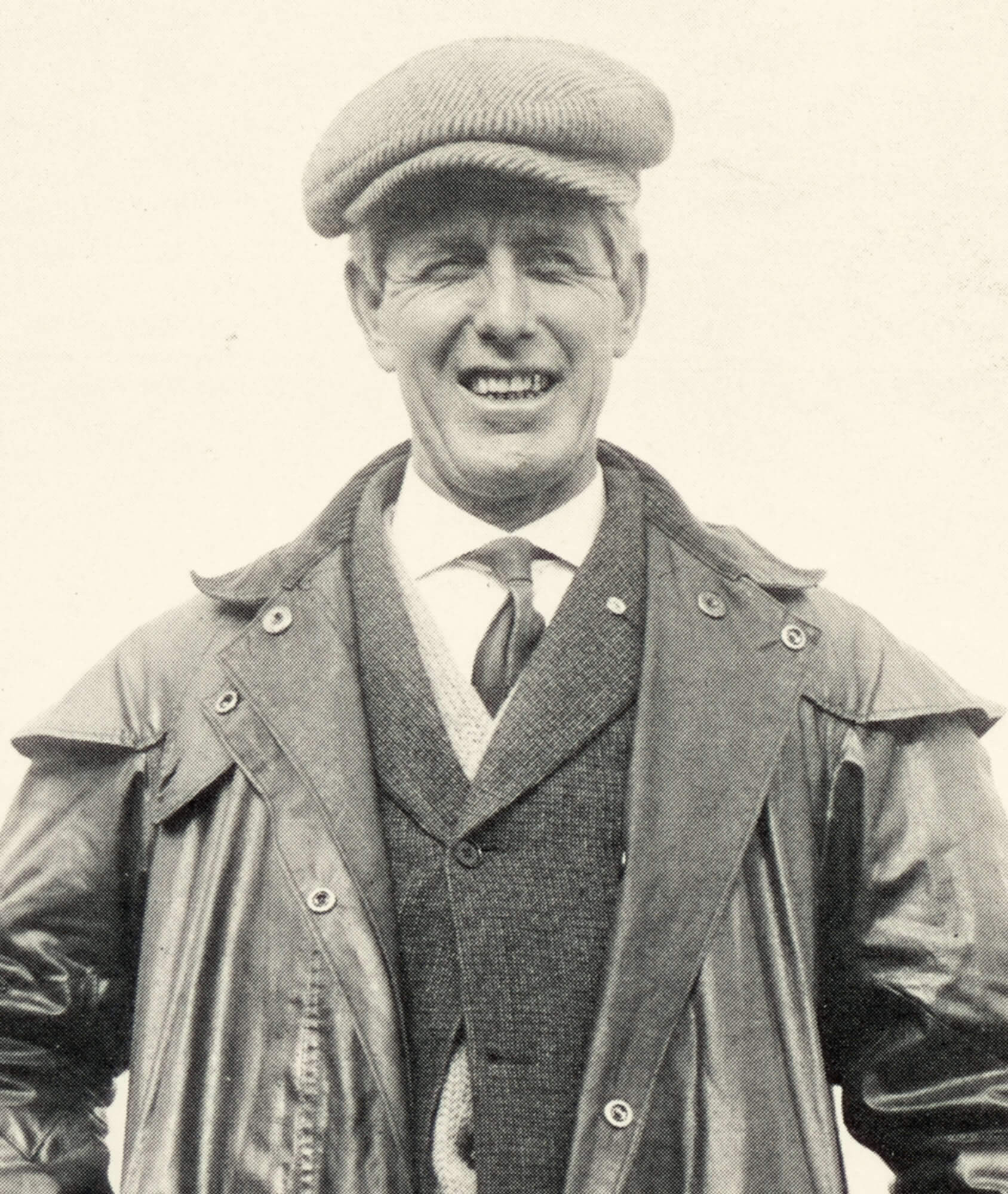
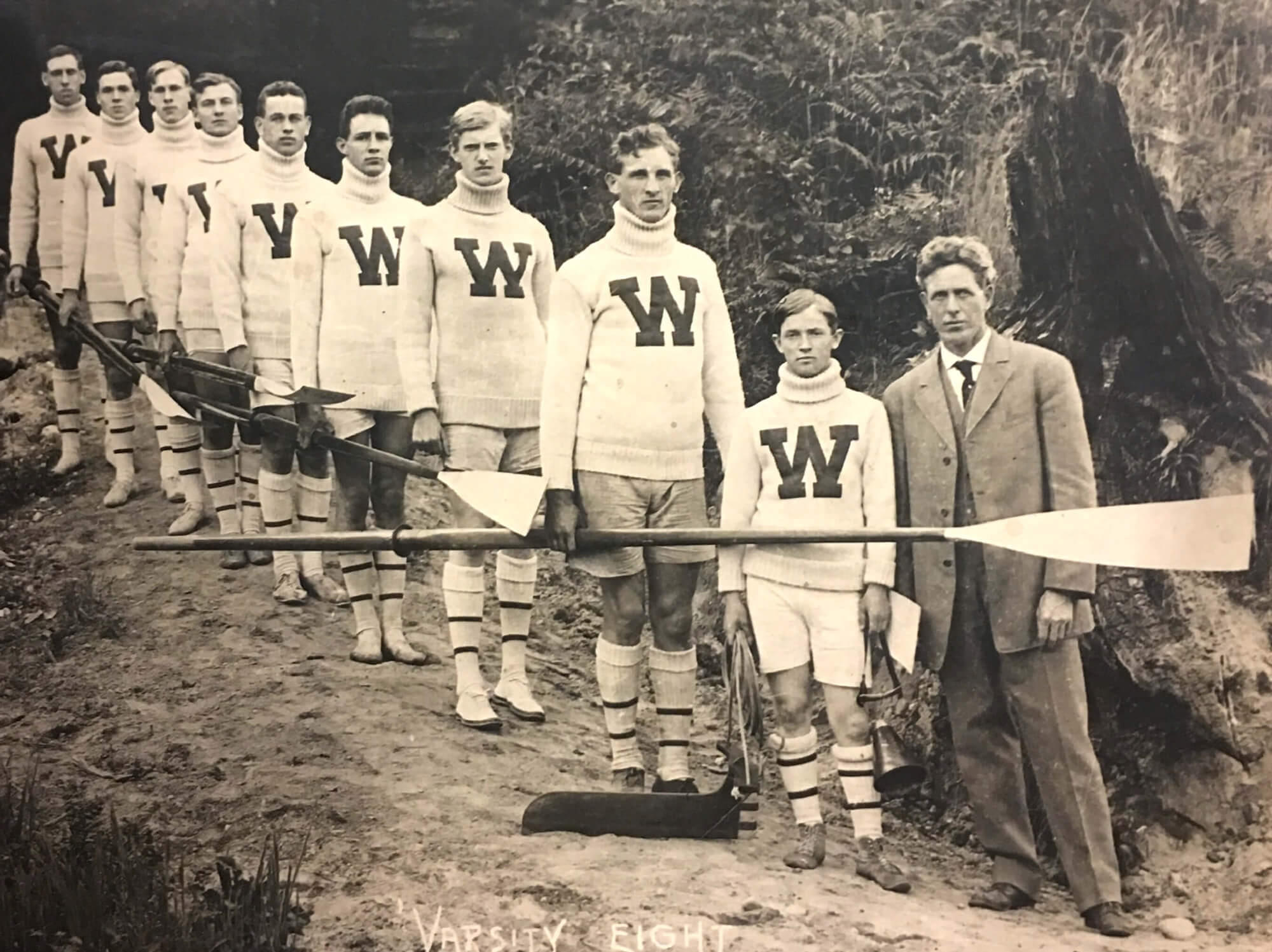
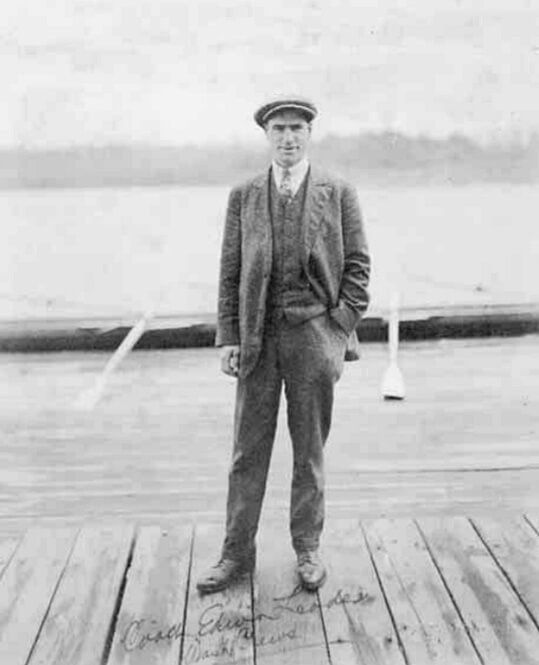
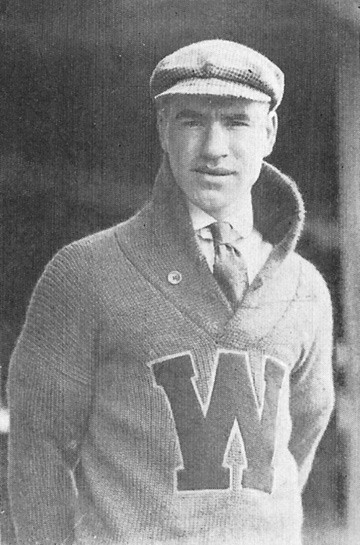
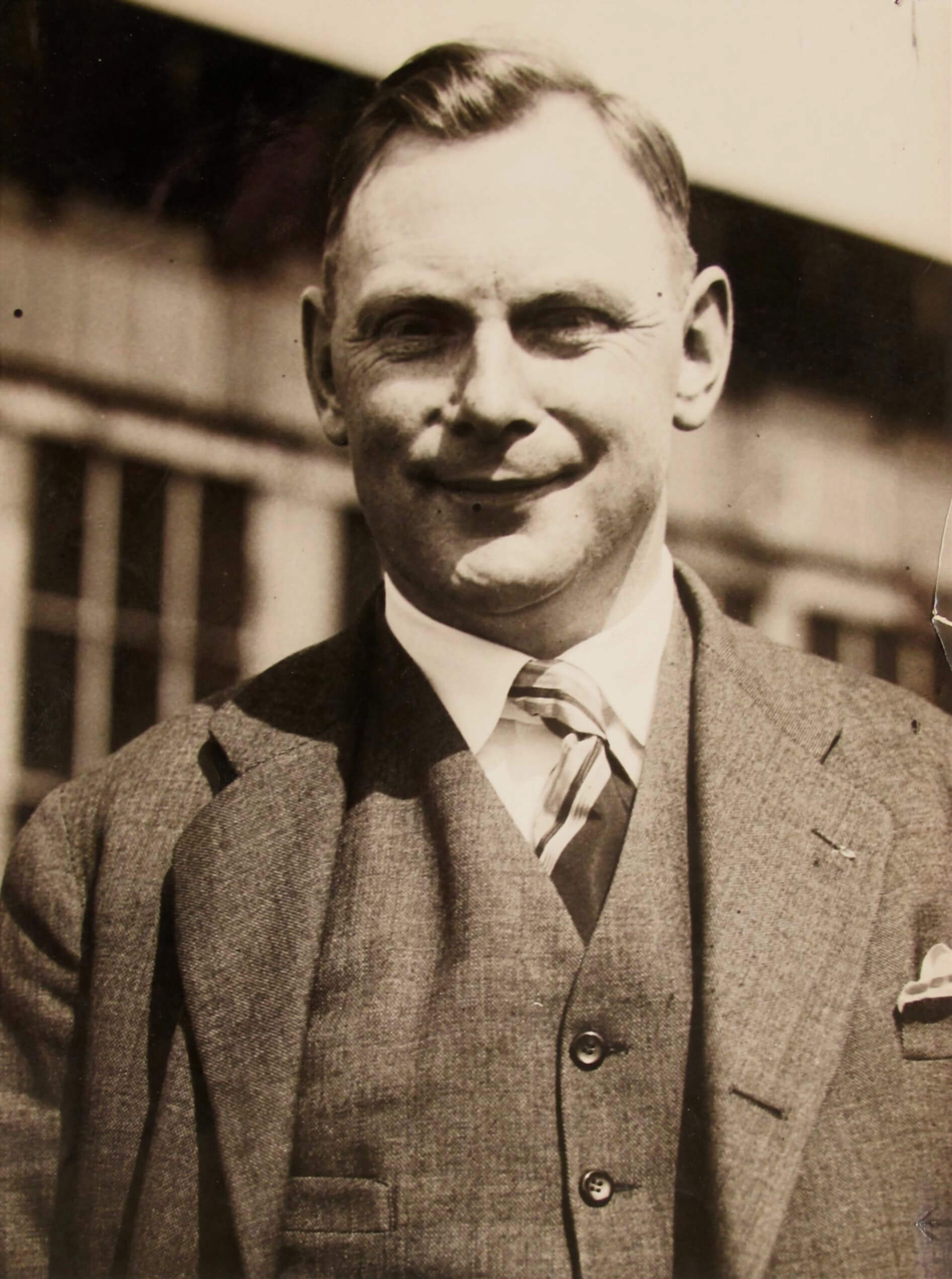
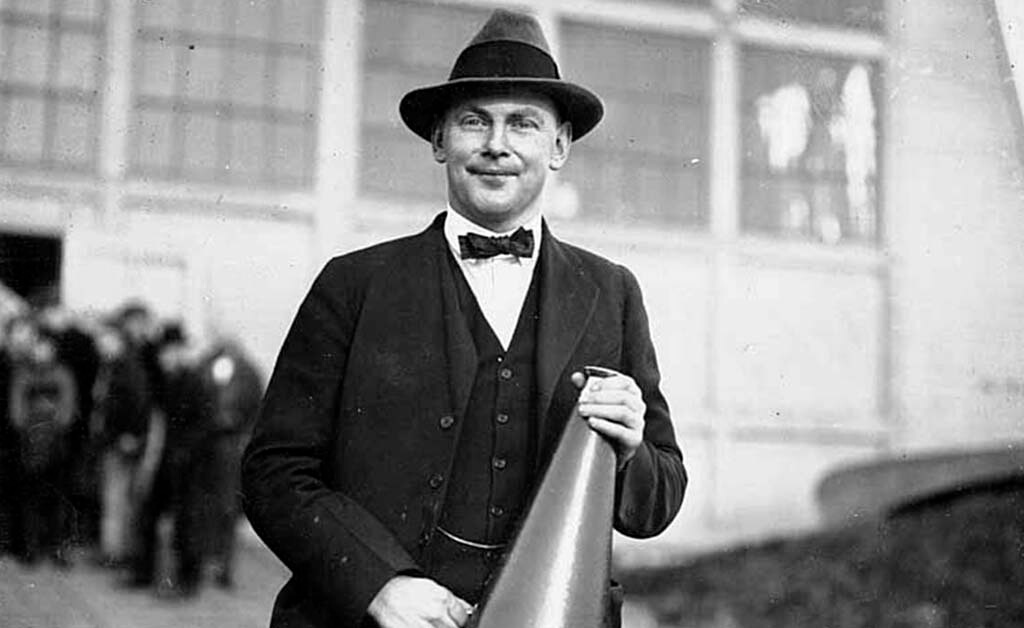
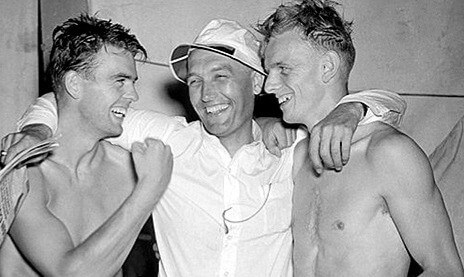
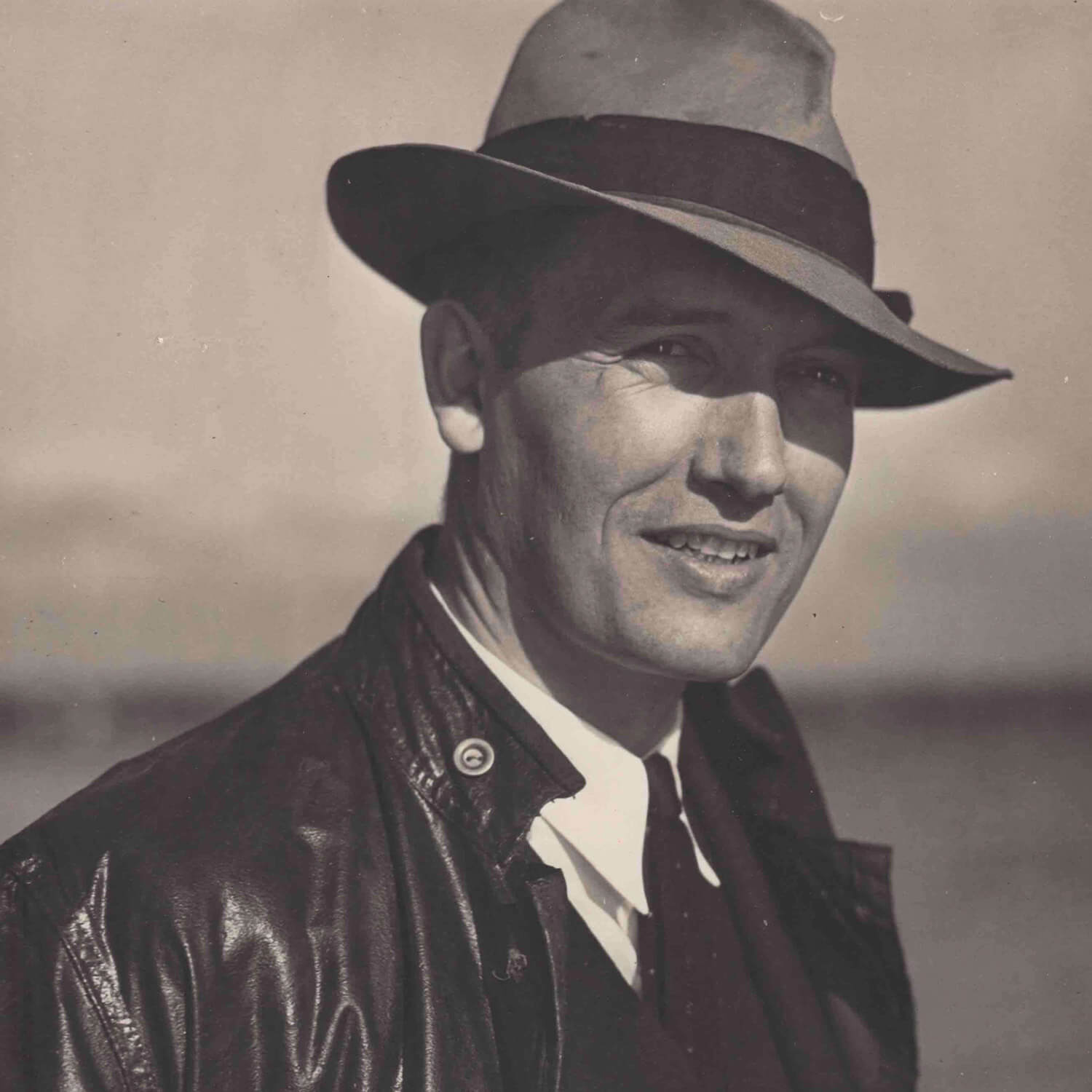
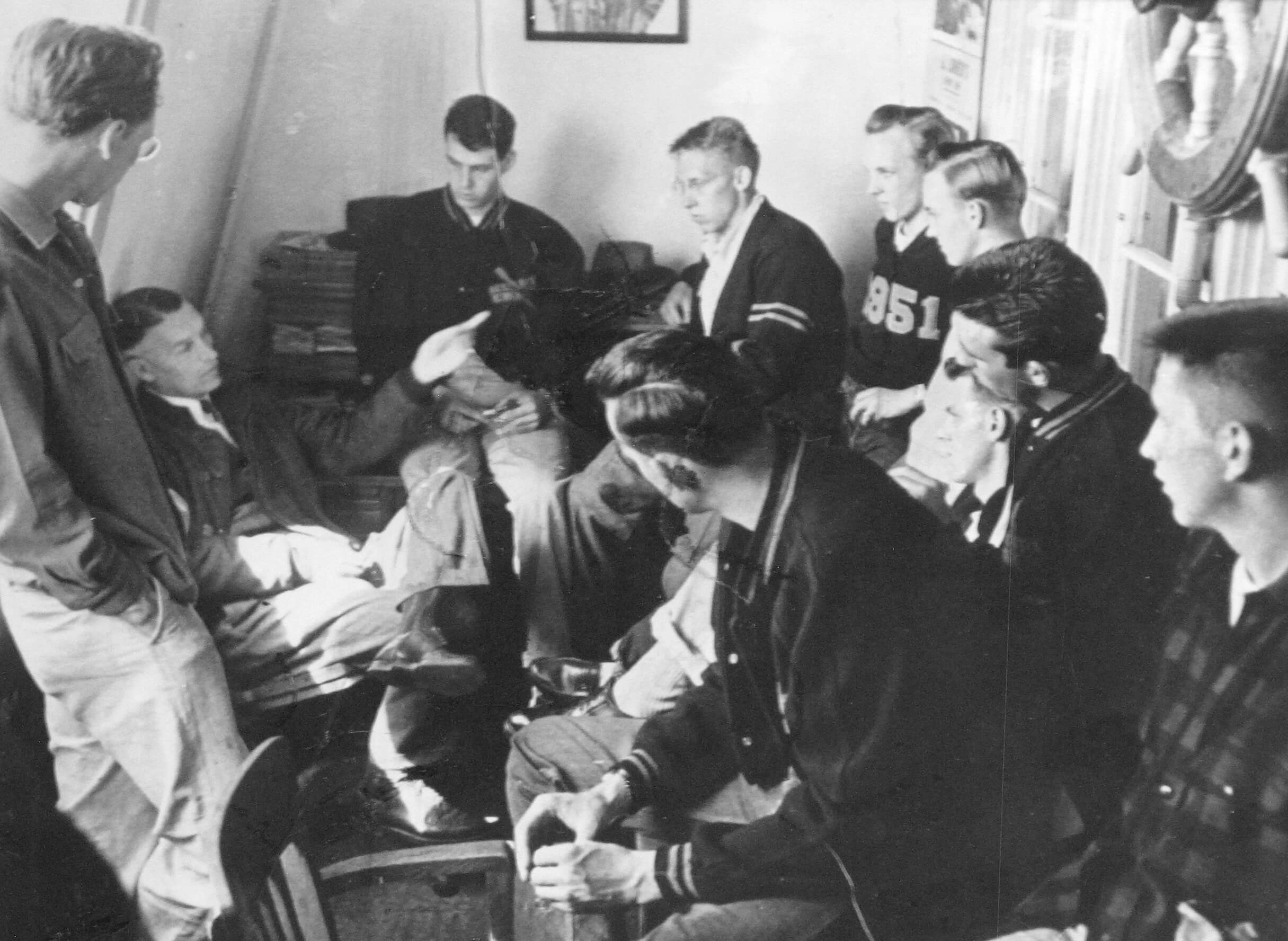
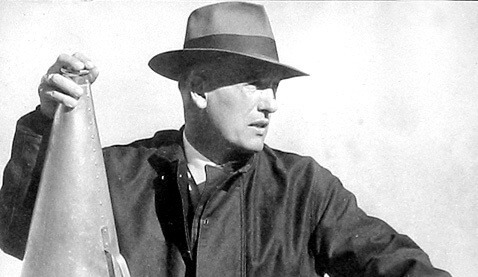
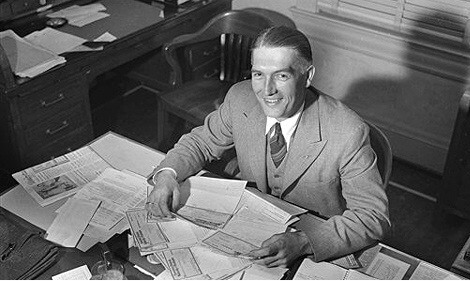
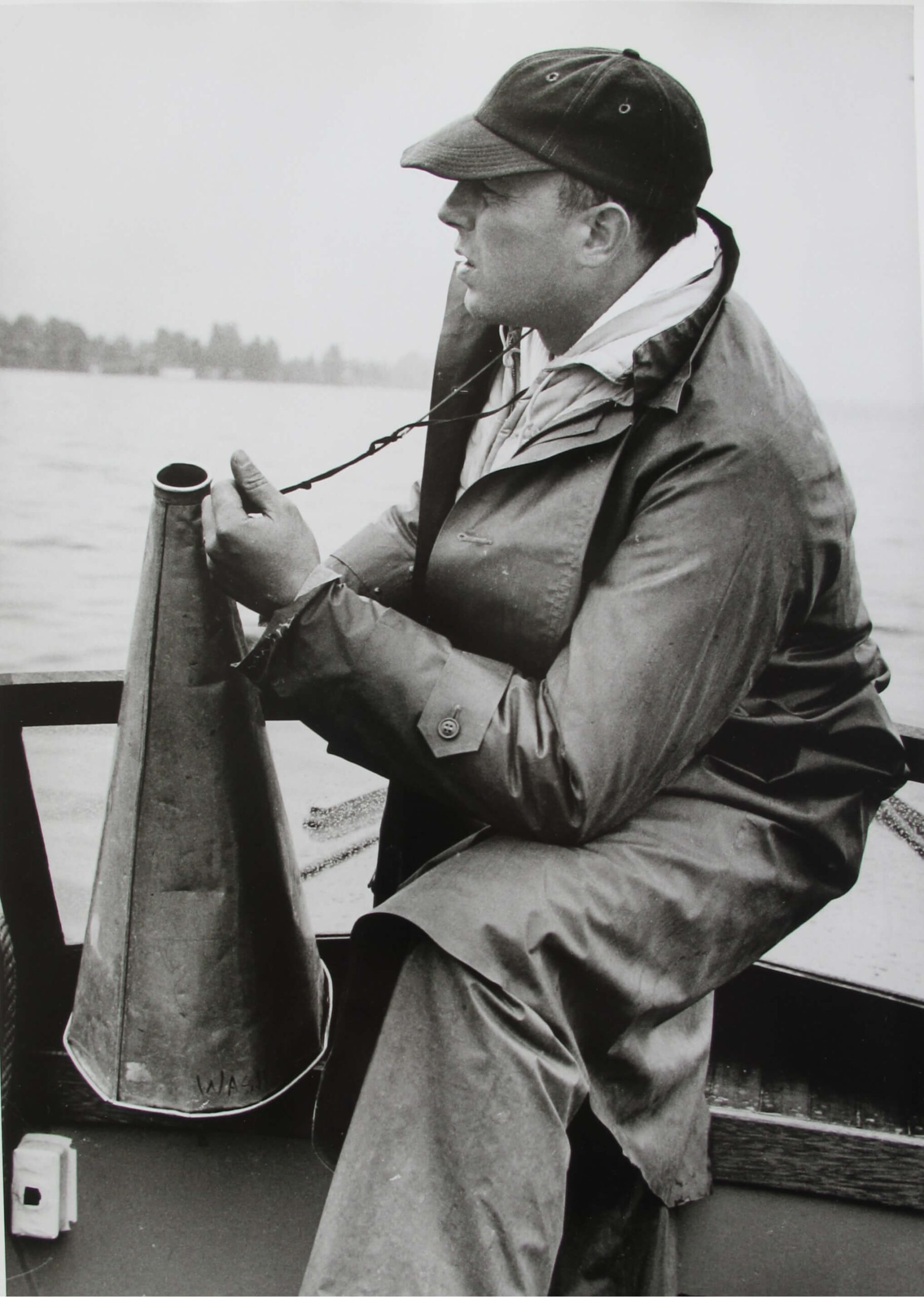
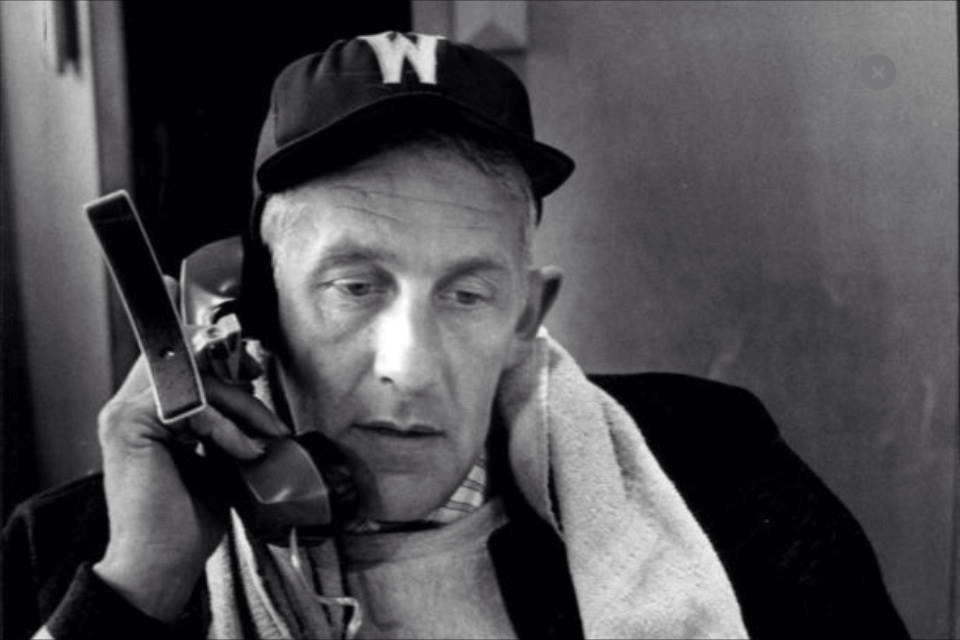
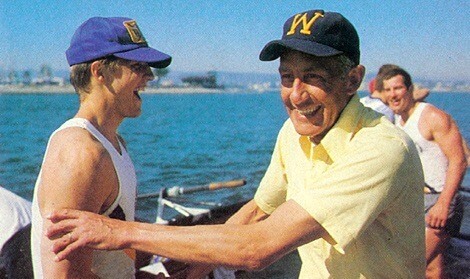
Alvin “Al” Ulbrickson became the youngest head coach at Washington in the Fall of 1927. The most successful stroke-oar in the history of the program to date, Ulbrickson had spent one year coaching the Frosh team under Rusty Callow before being elevated into the head coaching role at the age of twenty-four.
Ulbrickson grew up on Mercer Island, rowing roundtrip from home each day to attend Franklin High School in Seattle. Born to the water, Ulbrickson was as tough as he was smart, one of only a handful of athletes to earn Phi Beta Kappa honors at the UW School of Business. Nicknamed the “Dour Dane” by local sports columnists due to his often quiet and short responses to questions, in fact Ulbrickson was highly respected and liked by his athletes.
His early years at coaching were hit and miss, with only two years under his belt before the Great Depression slammed the brakes on athletics. Not only did enrollment decline at the UW, but those who were athletic enough to row often could not make ends meet in order to stay on the team. Even so, Ulbrickson was adamant about health and diet, and challenged his teams to daily competition and physical conditioning.
His first real success came in 1933, a year when the IRA’s were cancelled due to the Depression. A replacement, two-thousand-meter National Championship was offered in Long Beach, California, and Ulbrickson’s Varsity prevailed over Harvard, Yale, and Cornell, capping an undefeated season where they also defeated Cal at The Dual.
In addition, that fall, a group of freshmen turned out under frosh coach Tom Bolles (later Harvard’s head coach and Athletic Director) that would change the trajectory for Ulbrickson and Washington. A dominant class, the undefeated 1934 freshmen eight would coast to the National Championship at Poughkeepsie and would return, as one, to win the 1935 JV IRA as sophomores. But as has now become legend in both book and movie form, it was the ability of Ulbrickson to see beyond that potential, and put together one of the greatest line-ups in the history of the sport in 1936. Not only did his full team sweep the IRA in 1936 (the first team in history to do that), his ’36 Varsity 8 would go on to win the U.S. Trials, and ultimately Olympic Gold, in a surreal Olympic final in Berlin, Germany.
The 1937 squad would repeat the IRA sweep, with Ulbrickson now fully hitting his stride. His 1940 and 1941 Varsity eights were some of his best (both National Champions), only WWII cutting short the success, as Ulbrickson was named Washington Athletic Director during the war years. Immediately following the end of the war, Ulbrickson – along with a supportive Seattle community – played host to the nation for two blockbuster intercollegiate two-thousand-meter regattas in 1946 and 1947, with over 100,000 spectators lining Lake Washington in the spring of both years.
By 1948 the full team was back at the IRA, once again sweeping the regatta; they came close again in 1949, then came back in 1950 and swept it one more time. Four IRA sweeps in ten total IRA regattas (with no other coach or collegiate program coming close to that record until Michael Callahan), the ’48 season capped with another Olympic victory, this time in the coxed four in London. In 1952, Ulbrickson’s coxed four would also medal, this time with an Olympic bronze in Helsinki, his son Al Ulbrickson Jr. rowing in that boat.
The 1950 completion of the new Conibear Shellhouse on the east side of campus was a major milestone for Ulbrickson, finally moving out of the Navy hangar he called home for over twenty-five years and into a building specifically built for his team. Much in part due to the ’48 and ’36 Olympic victories (and the lobbying of the State Legislature by him and allies of the team), it was Ulbrickson that ultimately requested the building be named for Hiram Conibear.
Ulbrickson’s squad would ultimately top off his career with one of the greatest upset victories in the history of the sport. After being banned from the IRA in ’57 and ’58 due to a football team infraction, Ulbrickson took his team to Henley for the first time, only to come up short to the Soviet National Team in a semi-final. But behind the scenes, Ulbrickson (and the U.S. State Department) were quietly working on a re-match to take place in Moscow behind the Iron Curtain. That re-match was approved, and two weeks later Washington sat on the starting line in Moscow facing that same Soviet team. This time however Washington exploded off the starting line, slowly drawing away and winning by open water, a race covered internationally by live radio and stunning the sporting world.
Ulbrickson would return in the fall of 1958, but decided by New Year’s that after thirty years, it was time to retire. “With your uncompromising way of life as an example, your honest urging to ‘give the best that’s in us’ [and] stressing the need for teamwork…this lasts much longer and sinks much deeper into the lives of the men you have touched,” said one of his former athletes at his retirement. “Perhaps our practice of these values is the greatest tribute we can give.”